
Chimney Services
The methods behind creosote removal in Indian Mound Village
Mechanical removal and the risk to liners
Glaze can also be attacked mechanically with rotary heads and scrapers. The trade-off is the liner, since aggressive tools can damage clay tile and the mortar joints between tiles, and the maker of the PCR poultice presents it as a way to avoid cleaning methods it calls dangerous and potentially destructive.
Where mechanical removal suits the liner and the deposit, our crew uses tools sized to the flue and checks the surface as it works. Where it does not, a chemical treatment is the gentler route, and we explain the reasoning on the estimate.
Leave the glaze for professional removal
Scraping at glaze from the firebox, spraying unfamiliar products up the flue or trying to burn a deposit off with a hot fire can make the situation worse. Creosote is combustible, EPA notes, and enough of it can cause a chimney fire.
Leave the deposit as it is, keep the fireplace unused and describe what you have seen when you get in touch. Our specialists assess it safely from the top and the bottom of the chimney during the free inspection. A short description of what you see from the room is enough for us to start planning the visit.
When a sweep recommends removal
A chimney sweep who finds glaze has done you a favor by saying so. Brushing cannot lift it, so the sweep stops and recommends a removal treatment instead of leaving you with a flue that only looks cleaned.
Been told your Indian Mound Village chimney has glazed creosote? Tell us what was said and when. Our specialists confirm the deposit at a free inspection and give you a written plan and price for removal. If the sweep left notes, share them, since they help us compare what was seen then with what is there now.
Removal day at your chimney
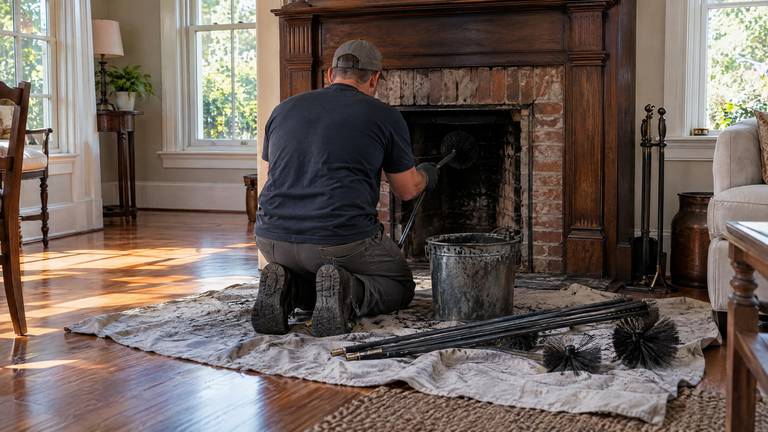
On the day, the room and roof are protected first and the fireplace opening is sealed. The product is mixed and applied to the flue, or the mechanical work is done, and the chimney is left to dry or cool as the method requires. Nothing goes into the flue until the protection is in place, and you are told how long each stage will take.
A follow-up visit clears the loosened deposit, sweeps the flue and inspects the liner. We walk you through what came out, what the flue looks like now and whether the fireplace is ready to use.


