
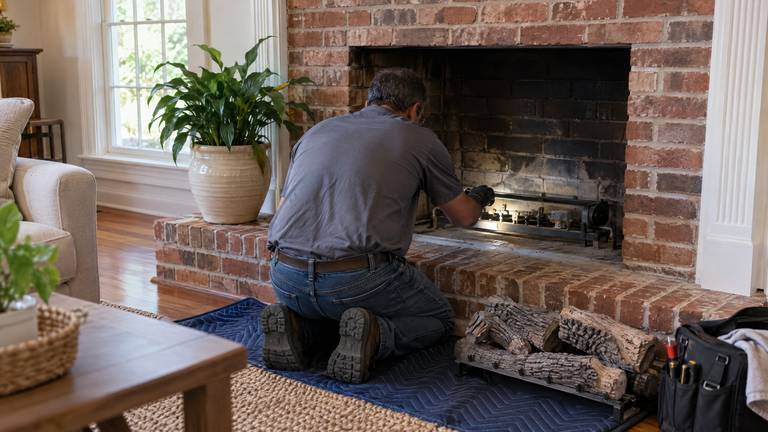
Gas Fireplace
Getting your gas fireplace right in Gabriella
Start with a free inspection, and we explain the fault before any part is ordered.
Read the rating plate before touching a part
Every gas fireplace carries a rating plate that names the maker, the model, the fuel it was built for and its input rating. That plate decides which manual applies, which parts fit and which pressures the burner should run at. Two units that look alike from across the room can use different ignition systems and different valves.
Our technicians find and read the plate first, usually behind the lower grille or the control access panel. If you can see it without taking anything apart, a note of the make and model when you book helps us bring the right information. If you cannot find it, leave that to us.
When the pilot goes out as you let go of the knob
On a manually lit pilot, the knob is held in while the thermocouple warms. If the pilot dies the moment you release it, one maker's troubleshooting chart points to a pilot flame that does not reach the thermocouple, a loose or dirty thermocouple connection, a worn thermocouple or a faulty valve.
That same chart notes a safety interlock that will not let the pilot relight until the thermocouple cools, about a minute on that model. Repeated attempts in a row do not help, and holding the knob longer does not fix a weak sensor. Leave the unit off and let a technician test it.
Logs and embers go back exactly as the diagram shows
The logs, embers, rocks or glass in a gas fireplace are placed to a diagram for a reason. The flame is designed to move around them in a particular way. A log nudged onto a burner port or embers piled too thick can make the flame strike the media, which leaves carbon on the logs, the glass and even the outside wall around the vent.
Before lifting anything for cleaning, we note where each piece sits, and we put it back to the manual's layout instead of to what looks good. If the set has been rearranged over the years, we restore the arrangement the manual specifies and show you what changed.
Where appliance repair ends and gas piping begins
Our gas fireplace work covers the appliance itself, meaning the burner, the controls, the ignition, the venting and the glass. New gas lines, piping changes and meter or tank work sit outside that, and they go to a gas contractor, the utility or the propane supplier.
The Florida fuel gas code requires piping to be checked for leakage when gas is turned back on after an interruption, and appliances are not put back into operation until their connections have been checked too. When a repair involves the supply, we coordinate with whoever handles it so the fireplace is relit only after that check.


