
Our Process
How chimney waterproofing is done in Forest City
How a treated chimney looks afterwards
A penetrating repellent is chosen partly because it changes the look of masonry so little. The ChimneySaver data sheet describes natural color and texture as unaffected, with little or no gloss, while noting that dense surfaces may darken slightly and that stains already on the masonry may darken.
Film formers behave differently, and Technical Note 6A warns that an unwanted sheen can signal a poorly chosen or poorly applied coating. We tell you what to expect on your brick, and the test area shows you before the full application. If you were hoping for a darker, wet look, we explain why the breathable option keeps the brick closer to its natural color.
Applying the repellent from the bottom up
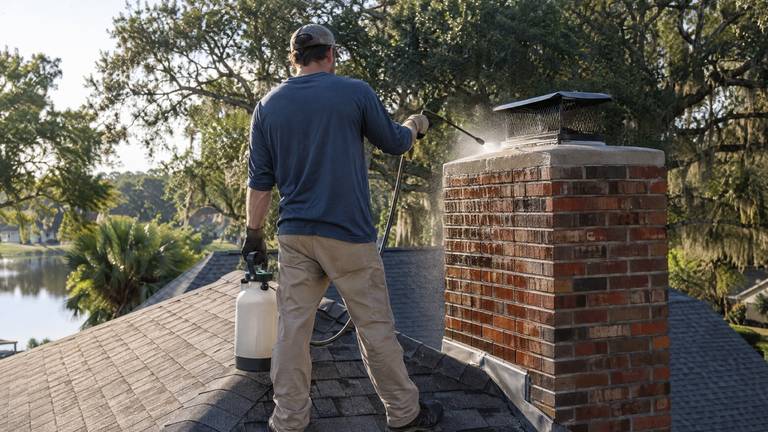
Vertical masonry is treated from the bottom up. Instructions for one water-based chimney repellent call for a low-pressure sprayer with a fan nozzle or a roller, with the surface flooded until runoff reaches six to eight inches below the spray pattern, followed by a second wet-on-wet pass within three to five minutes.
That saturating method is how the product gets deep enough into the masonry to work. It is slower than misting a light coat across the chimney, and it is the method our crew follows on Forest City homes. Each face is finished before the next one starts, and runs are brushed out so the treated surface dries evenly.
Enough product for the masonry to take
How much repellent a chimney needs depends on how porous its surface is. One water-based repellent's data sheet gives coverage ranges that differ for porous brick, dense brick, stucco and stone, and asks that the product not be thinned. Porous brick takes up more product than dense brick, and one chimney can have both.
A thin coat saves product and shortchanges the chimney. Our crew applies to saturation as the maker directs and records the product used, so the treatment on your Forest City home matches what the estimate described.
Painting a chimney after it has been treated
According to the ChimneySaver data sheet, surfaces treated with that repellent may be painted with a high quality oil-based paint, and testing is always necessary to confirm adhesion and compatibility.
If painting is in your plans, tell us before treatment. We factor it into the product choice for your Forest City chimney, so the two layers work together instead of against each other. Paint is a surface film, so it changes how the chimney dries, which Technical Note 6A treats as a real concern on exterior brick.


