
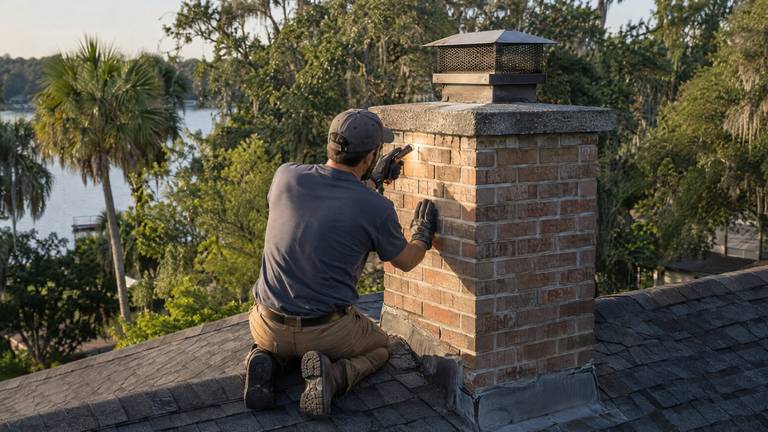
Chimney Inspection
Chimney inspection details for Elder Springs homes
Every inspection in Elder Springs follows the questions NFPA 211 asks about soundness, deposits and clearances.
Looking down the flue from the top
From the chimney top, the visible part of the flue lining says a great deal about the system. We look for cracked or shifted tile, gaps at the joints, heavy deposits and anything lodged in the passage.
A lining that is continuous and intact keeps heat and exhaust inside the flue and away from the masonry around it. Where we cannot see far enough to judge a section, we say so. We then explain what further access would show before recommending any repair to the lining, so you are never asked to pay for work based on a guess about a part nobody could see.
Factory-built units and their listing
A factory-built fireplace and its metal chimney are tested and listed together, and the Florida Building Code requires them to be installed according to that listing. The data plate, often near the firebox or behind a panel, names the model.
Where we can reach the label, we record the model and check that the visible chimney parts match the system. Mixed parts from different makers are noted, because the listing covers only the combination that was tested. The model number also tells you which replacement parts and instructions apply if a repair is needed later.
Inspections tied to a closing date
Real estate chimney inspections often run on a tight schedule. Tell us the contract dates when you call, along with who will give access to the house.
The findings describe the chimney as it is on the day of the visit. They are not a guarantee about the sale, and they do not replace the other inspections a purchase may involve. Any recommended repair is priced in writing, line by line, so buyer and seller can discuss it with the same information in front of them.
Spark screens on masonry chimneys
Where a spark arrestor is installed on a masonry chimney, the Florida Building Code sets how fine its mesh may be and requires it to be accessible and removable for cleaning.
Holes, heavy clogging and corrosion in the screen are noted, along with whether it can still be removed. A screen packed with soot or leaves restricts the flow of exhaust, while a torn one no longer stops embers or animals. Cleaning or replacement is described in the findings.


