
Our Process
How chimney waterproofing is done in Elder Springs
How a siloxane water repellent works
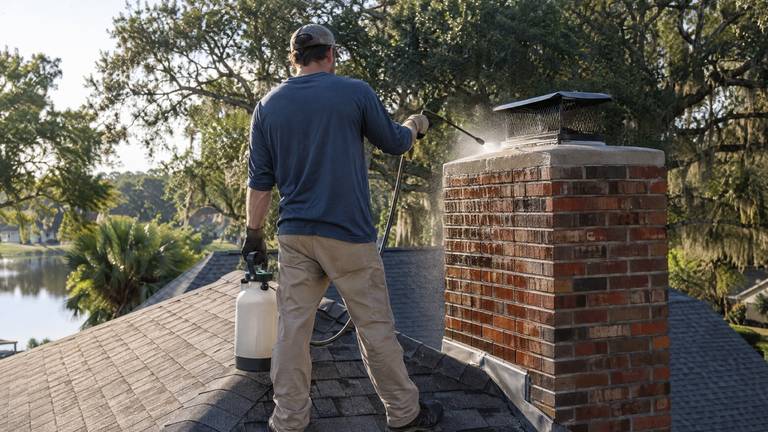
According to Technical Note 6A, siloxanes form a chemical bond with the silica and alumina in brick and mortar, and that bond is what makes the treated masonry repel water. SaverSystems' data sheet for its water-based ChimneySaver repellent describes a hydrophobic zone beneath the surface that keeps water molecules out while water vapor moves freely.
Because the reaction happens inside the pores, the surface texture and color are meant to stay much as they were. The same chemistry is why these products bond to glass that has not been protected, so masking nearby windows is part of the job on your Elder Springs home.
Repairs that come before any repellent
BIA guidance is direct about the order of work. The source of water penetration should be found and the necessary repairs completed before a water repellent is applied, and its list of repairs to finish first includes repointing cracked or disintegrated joints, replacing brick with spalled faces and replacing failed sealant.
The ChimneySaver instructions say the same thing in their own words, asking for structural cracks, faulty roofing, flashing, mortar joints and sealants to be repaired before application. On your Elder Springs chimney those repairs are quoted as separate lines, the repellent comes last, and you can approve the repairs without committing to the treatment.
Why chimneys are good candidates for a repellent
Most well-built brickwork does not need a clear water repellent under normal exposure, according to Technical Note 6A. The same note lists chimneys, along with parapets and barrier walls, as brickwork that is particularly vulnerable to water absorption and where a repellent can be useful.
A chimney stands above the roof with every face exposed and no eaves to shelter it. That is why a breathable repellent can earn its place on a sound chimney in Elder Springs, and why we still check the repairs first. Sound, absorbent brick gains the most from a treatment, while open joints need masonry work before any product.
Enough product for the masonry to take
How much repellent a chimney needs depends on how porous its surface is. One water-based repellent's data sheet gives coverage ranges that differ for porous brick, dense brick, stucco and stone, and asks that the product not be thinned. Porous brick takes up more product than dense brick, and one chimney can have both.
A thin coat saves product and shortchanges the chimney. Our crew applies to saturation as the maker directs and records the product used, so the treatment on your Elder Springs home matches what the estimate described.


