
Our Process
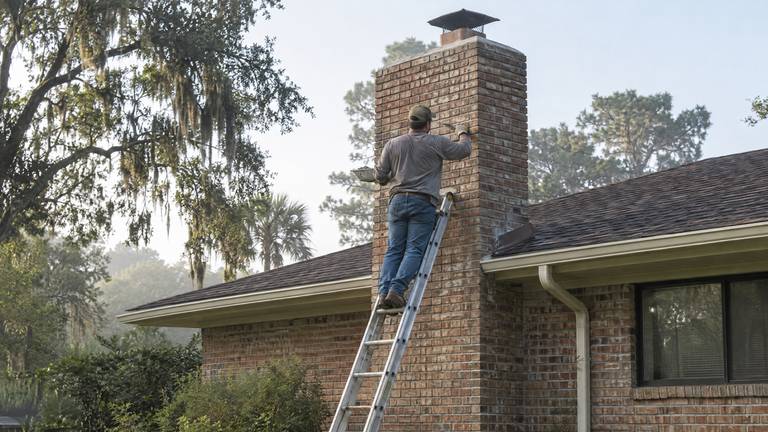
How chimney joints are repointed in Crystal Point
Mortar conditions that call for repointing
Five conditions warrant repointing, according to Brick Industry Association Technical Note 46: mortar eroded more than 1/4 inch deep, crumbling mortar, voids in the mortar, hairline cracks within the mortar and cracks where brick meets mortar. Each of them can let moisture into the masonry.
During the free inspection we check each face of the chimney for those conditions, from the lowest visible course to the courses under the crown. Joints that are only weathered on the surface can often stay. Joints that are open, hollow or soft are marked for repointing and included in the written estimate.
Why shallow repointing fails early
The Park Service brief ties its depth rule to two goals, an adequate bond and the prevention of mortar popouts. New mortar needs enough contact with sound surfaces inside the joint to stay put through years of rain and heat. Filling only the top of a joint gives it very little to grip.
Popped-out mortar is easy to spot later as short strips missing from otherwise new joints. If an earlier repair on your chimney has failed that way, our specialists cut it back and redo the joint properly, and the free inspection tells you how much of the old work has to come out.
Repointing before a water repellent
Clear-coating guidance from the Brick Industry Association lists repointing of incompletely filled, cracked or disintegrated joints among the repairs to finish before any water repellent is applied, because a coating cannot seal an open joint. The data sheet for one chimney water repellent asks for at least 72 hours after repairs or tuckpointing before application.
If you plan to waterproof your Crystal Point chimney, repointing comes first in the schedule, and the two jobs are priced as separate lines. The same BIA guidance notes that repairs often correct a moisture problem on their own, so we are glad to wait and see before treating the brick.
Cleaning brick after repointing
New joints stay vulnerable for a while after they look finished. The Park Service brief says fresh mortar does not fully cure for several months, that it should be fully hardened before a repointed wall is cleaned, usually after about thirty days, and that metal bristle brushes should not be used on historic masonry.
We brush excess mortar off the brick as the joints are tooled, so a separate cleaning step is rarely needed afterwards. If other cleaning is planned for the chimney, tell us, and we will schedule it so the new joints are not harmed.


