
Our Process
How we replace a chase cover in Crystal Point
Why the chimney maker requires a chase top
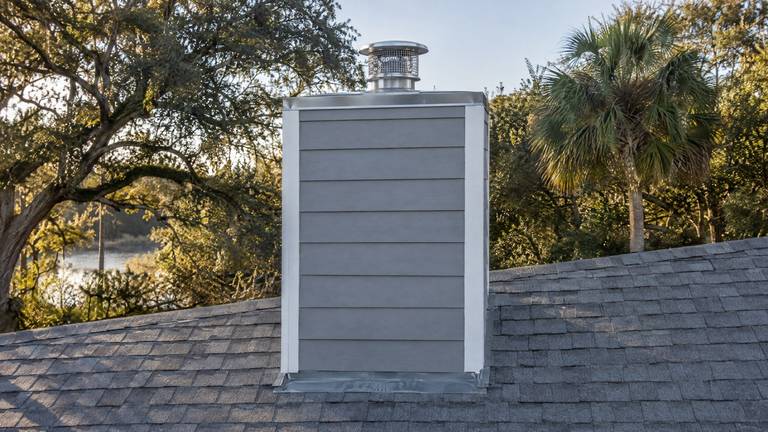
A factory-built fireplace is tested and listed as one complete system, so the Florida Building Code has it installed and topped out exactly as its maker's instructions describe. Those instructions treat the chase top as part of the installation. The Majestic SB60 and SB80 manual, for example, states that a chase installation must use a chase top and that it may be field built from noncombustible material.
A missing, torn or makeshift cover is therefore more than a cosmetic problem. Our specialists fit a replacement that follows the instructions for the system on your roof and explain the relevant details before work begins. If the old top was never installed to those instructions, we say so and show you where it departs from them.
Checking the wood deck under the old cover
Many chases have a plywood or board deck that the metal cover rests on. After a cover has leaked for a while, that deck softens, the metal sinks into the soft spots and water collects faster. A new cover laid over rotten wood sags the same way.
Our specialists check the deck and top framing when the old cover comes off. If repair is needed, it appears as its own line on the estimate, so you can see what the chase top job includes and approve each part. Wood that is only surface-stained can stay, and wood that crumbles or flexes is replaced before the cover is set.
When the old cover leaks before the new one is ready
A replacement cover is fabricated after measuring, so there can be a short wait between the free inspection and installation. If water is getting in during that time, leave the fireplace unused and watch the ceiling and walls near the chase.
Please do not tape, tarp or seal around an operating chimney pipe yourself. If a temporary measure makes sense on your Crystal Point home, our team fits it, tells you it is temporary and removes it when the permanent cover goes on. Tell us if you had planned to use the fireplace soon, and we factor that into scheduling the installation.
Fewer seams on the new top
Every seam in a chase cover is a place water can work into. The Majestic manual calls for all seams to be caulked, and a cover formed with as few joints as the chase size allows gives the sealant less to do.
Many single-pipe chases take one formed sheet with a joined collar. Larger chases may need seams, and where they cannot be avoided we lap and seal them so water runs over each joint and away from it. Our specialists also keep seams out of the path water takes toward the collar, where a failed joint would do the most harm.


