
Chimney Inspection
Inspecting the chimney, flue and fireplace
No pressure after the visit, and every recommended job is priced in writing before you decide.
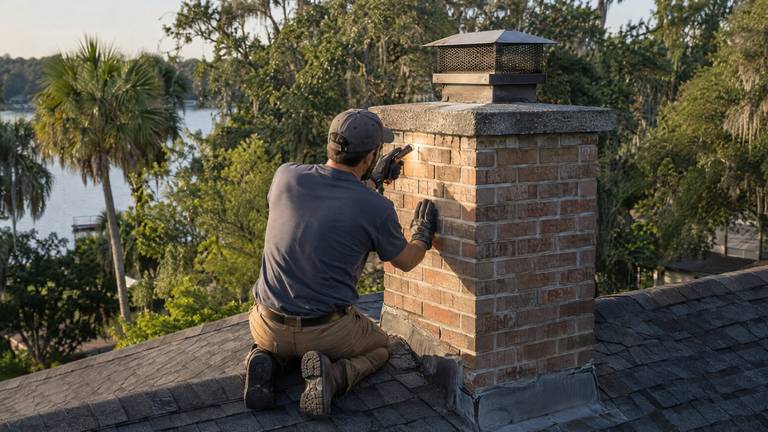
Flashing where the chimney meets the roof
The joint between the chimney and the roof is a frequent path for water. We check the base flashing along the roof, the counterflashing set into the masonry above it and the sealant at each edge.
Loose laps, rusted metal and sealant used in place of proper flashing all appear as findings. We also look at the uphill side of the chimney, where leaves and water collect. Where the roof side of the joint is the problem rather than the chimney side, we say so plainly, so the right trade handles the right part and you do not pay twice for the same leak.
The cleanout door at the base
A cleanout opening near the base of each flue is a Florida Building Code requirement for masonry chimneys. A door that is rusted open or missing can let air, water or animals into the chimney.
We check that the door opens, closes and seals, and we note deposits or debris collected behind it. Debris at the base can also show what has been falling down the flue. A damaged door is a small repair when it is caught early, and it is priced on its own line if you want it done.
Signs of water inside the system
Rust on the damper, stains in the smoke chamber, crumbling mortar in the firebox and a musty smell all point to water entering from above. White mineral deposits on brick show where moisture has moved through the masonry.
We follow these signs back toward the likely entry points and tell you which ones show evidence. Each finding says what we observed and where, so a repair can be aimed at the cause rather than the stain. When the source cannot be settled on a dry day, we explain what a controlled water test would add.
Checks after roof work
Roofers remove and replace the flashing around the chimney during a reroof. The new base flashing and the counterflashing above it need to overlap correctly, and the masonry joints that hold the counterflashing need to be sound.
From the roof, the finished joint is examined for sealant used in place of metal, and any damage to the brick or crown from the work is noted. Clear findings help you settle any issue with the roofer while the job is recent. Where the chimney itself needs work, it is priced separately from anything the roofer should correct.


