
Chimney Services
Sealing, repairing and rebuilding the crown
Crown repair from local pros who form every new crown with slope, overhang and a drip.
Mortar washes and formed crowns
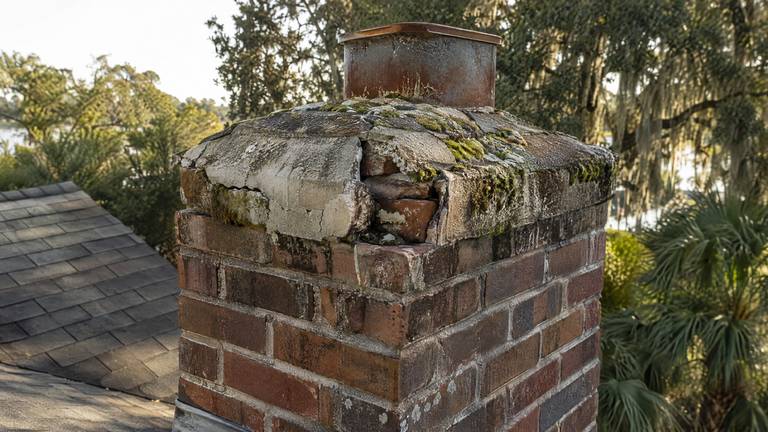
Many chimneys were finished with a layer of mortar troweled over the top course and sloped toward the edge. From the ground it looks like a crown, but it is thin, rarely reinforced and made from a mix meant for joints. The Brick Industry Association notes that mortar washes may not be as durable.
If the wash is still holding fast, a sealer and a yearly look may be enough for now. Once it is loose, cracked through or turning to sand, we recommend breaking it off and casting a proper crown with a thick edge, a projection past the brick and a drip underneath. Either way, you hear which kind of top your chimney has before any price.
Precast and cast-in-place crowns
A crown can be cast on the chimney or made in advance and set on a mortar bed. The Brick Industry Association says prefabricated caps generally perform better than cast-in-place ones and are more easily made water-resistant, and it recommends that a cast-in-place crown follow the same shape, with thickened sides and an overhang.
Both can be done well. The choice depends on the chimney's size and shape, access to the roof and how the flues are arranged. We explain which approach fits your chimney and price it in writing before any work starts.
Signs a crown is letting water in
A failing crown rarely announces itself on the roof. More often the first signs are inside, as a damp patch on the ceiling or wall beside the chimney, water on the damper or a musty smell from the fireplace after rain.
Outside, look for dark wet bands under the chimney top, white powdery deposits on the upper brick and flakes of brick or concrete in the gutter. We connect those signs to the crown or to another entry point before recommending any repair.
Removing and refitting a cap during crown work
A crown-mounted cap or a bolt-on cap often has to come off before the crown can be repaired. Some come off cleanly and can go back on. Others are rusted, bent or fastened with screws that will not hold in the new surface.
Before the work, you find out whether the existing cap can be reused. If it cannot, the replacement is priced on its own line, and the new crown is shaped so a crown-mounted cap will seat flat with its fasteners well back from the edge.


