
Our Services
How we install fireplace inserts in Bertha
When the schedule allows, we inspect the same day in Bertha and explain the plan at the fireplace.
Ember protection at the loading door
The loading door is where embers can drop when wood is added. The manual we follow calls for ember protection in front of the insert, in addition to the clearances around it.
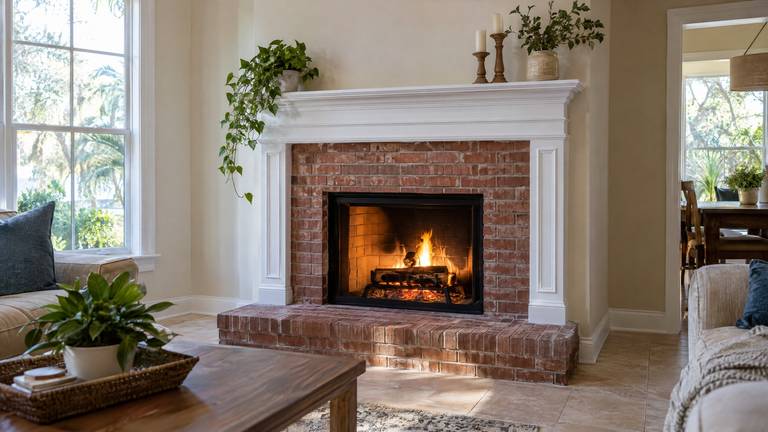
Our installers confirm that the floor in front of the door meets the manual before the first fire. We also show you how to open the door slowly and load the fire so embers stay in the firebox. We point out where embers are most likely to land, so that area stays clear of rugs, baskets and kindling.
Exhaust fans and the draft
Kitchen and bath fans, dryers and tight construction can lower the air pressure in a house. One insert manual warns that negative pressure can pull fumes into the living area, which is one reason the insert runs with its door closed.
During the inspection we ask about large exhaust fans near the fireplace and explain how they can affect the draft. Where the manual allows outside air, we tell you whether it suits your home. If the draft in your fireplace has ever suffered when a fan runs, mention it at the inspection.
What never goes into the insert
EPA lists what should never be burned in a wood heater, including household trash, cardboard, plastics, foam, colored paper, and coated, painted or pressure-treated wood. Leftover lumber from a home project usually falls into that list.
We go over the list with you after installation. Clean, seasoned firewood is the only fuel the insert needs, and keeping to it protects the insert, the liner and the air inside and outside your home. Burning only clean wood also keeps the glass and the liner cleaner between maintenance visits.
The baffle inside the firebox
The baffle above the fire steers hot gases and helps the insert burn completely. One manual says the insert must not be run without its baffle and insulation in place, and another asks owners to check that the baffle bricks are intact.
We confirm the baffle is seated correctly before the first fire and show you where it sits. At each maintenance visit we check it for cracks or movement. A cracked baffle board or a shifted brick is a simple repair when it is caught early.


