
Fireplace Services
Electric fireplace installation details for Wekiwa Springs homes
Every unit is planned from its own manual, and the full job is priced in writing first.
Keeping the cord out of harm's way
A plug-in firebox manual we follow says the cord should not run under carpet, rugs or furniture. A cord trapped under a rug can be crushed or worn through without anyone noticing, and a heater cord carries a steady load.
Our installers route the cord along a clear path to the outlet and place the unit so no furniture rests on it. If the only route would cross a walkway, we suggest a different position or an outlet closer to the unit, added by an electrician.
The warm trim around the heater
An electric fireplace has no open flame, but the trim around the heater outlet can get hot enough to matter. The built-in manual we follow says so and asks that young children be supervised near the unit.
We show you where the warm areas are during the handover and suggest spots for rugs, toys and pet beds away from the heater outlet. That conversation takes a few minutes and saves surprises on the first cool evening. The same goes for curtains and furniture that could drift toward the front of the unit.
Indoor units stay indoors
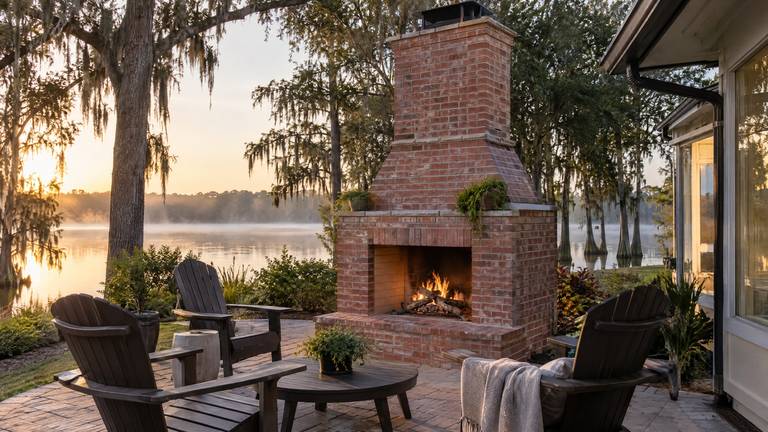
Both manuals we reference for this service say their units are not for outdoor use. Covered porches and patios still see blowing rain and damp air that indoor electronics are not built for.
If you want a flame outside, we check whether the model's maker rates it for that location. When it is not rated, we recommend keeping it inside and help you find the spot where the family will enjoy it most. That keeps the unit inside its listing and the warranty paperwork straightforward.
Plug-in appliance or built-in project
A plug-in electric fireplace is treated as an appliance, while the maker's documentation says hardwired built-in units should be checked against local building codes. Which side of that line a project sits on decides whether it involves more than placing and connecting the unit.
You learn where your project sits and who handles any electrical approval that applies. Nothing is assumed, and nothing is left for you to discover after the wall is closed.


