
Our Process
Waterproofing a chimney in Sanlando Springs, in detail
Letting the repairs prove themselves first
Patience is part of good waterproofing advice. After remedial repairs are completed and inspected, Technical Note 6A advises waiting several months to see whether a water repellent is still necessary, because moisture problems are often corrected by those repairs alone.
We are comfortable recommending that approach. If your Sanlando Springs chimney stays dry after its repairs, you may not need a repellent at all, and if it still absorbs water, the treatment can be booked with better information in hand. Either way the decision is yours, and a follow-up look after the repairs is free.
How a treated chimney looks afterwards
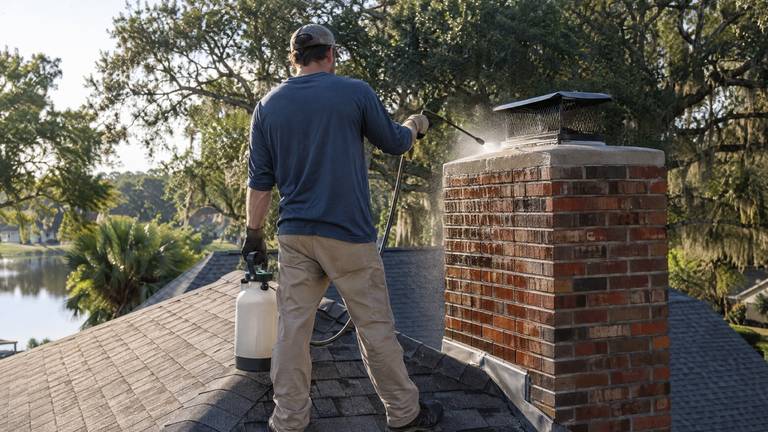
A penetrating repellent is chosen partly because it changes the look of masonry so little. The ChimneySaver data sheet describes natural color and texture as unaffected, with little or no gloss, while noting that dense surfaces may darken slightly and that stains already on the masonry may darken.
Film formers behave differently, and Technical Note 6A warns that an unwanted sheen can signal a poorly chosen or poorly applied coating. We tell you what to expect on your brick, and the test area shows you before the full application. If you were hoping for a darker, wet look, we explain why the breathable option keeps the brick closer to its natural color.
What an exterior repellent will not do
A chimney water repellent is an exterior treatment. One manufacturer states plainly that its water-based product is not intended for interior use or for resistance to hydrostatic pressure, and no repellent helps with rain falling straight down an uncapped flue or running behind loose flashing.
If your concern is water in the firebox, a stain on the ceiling or a musty smell, the free inspection looks for the entry point first. The fix may be a cap, flashing or crown repair, priced on its own, with waterproofing considered afterwards.
Why we avoid film-forming sealers on chimneys
Film formers can bridge hairline cracks, Technical Note 6A acknowledges, but they also hold back evaporation through the brick face. When moisture gets behind them, the note warns of clouding and spalling, and it names acrylics, stearates, mineral gum waxes and urethanes among the film-forming products.
A chimney is exactly the kind of masonry that needs to dry out after rain, so a surface film is a poor trade on a chimney. We recommend penetrating, vapor-permeable repellents and explain the reason on the estimate.


