
Our Work
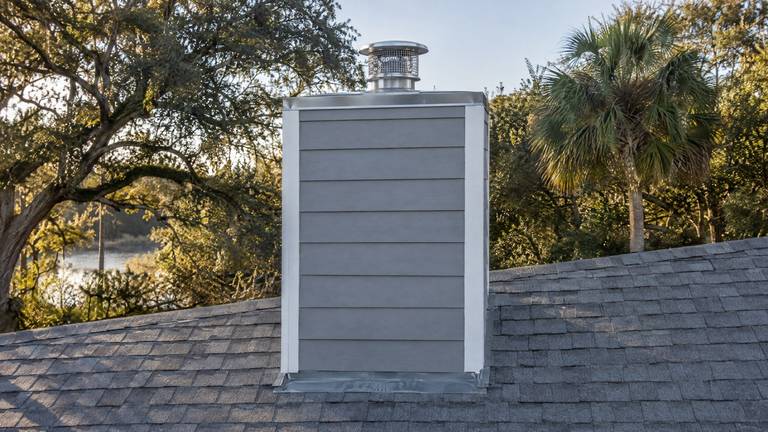
The details of a new chase cover in Heathrow
A top shaped to drain instead of pool
Rust holes in a chase cover tend to start in the low spots where rain sits after a storm, because a flat or sagging sheet holds water against the metal for hours. Manufacturer instructions call for the top to slope down and away from the pipe opening, and the Majestic manual sets that fall at a minimum of 1/4 inch per foot.
A new cover for a chase in Heathrow is formed with the fall built in, often with diagonal cross breaks that turn a flat sheet into a shallow pyramid. Water then runs to the edges and leaves over the drip edge. The bends also stiffen the sheet, so the cover keeps its shape when someone works near it during later service.
Sheet thickness and the minimum in the manual
Thin sheet flexes, dents under a ladder foot and settles into low spots. Manufacturers set a floor for it: the Majestic manual shows a galvanized chase top of at least .018 inch, listed as 26 gauge. Gauge numbers run backward, so a smaller gauge number means thicker sheet, which surprises many homeowners reading an estimate for the first time.
Your estimate names the gauge of the proposed cover, and we never go below the thickness your system's instructions list. If you want heavier sheet for a large chase, we price that option next to the standard one so you can compare.
Checking the wood deck under the old cover
Many chases have a plywood or board deck that the metal cover rests on. After a cover has leaked for a while, that deck softens, the metal sinks into the soft spots and water collects faster. A new cover laid over rotten wood sags the same way.
Our specialists check the deck and top framing when the old cover comes off. If repair is needed, it appears as its own line on the estimate, so you can see what the chase top job includes and approve each part. Wood that is only surface-stained can stay, and wood that crumbles or flexes is replaced before the cover is set.
Pipe height above the new cover
Changing a chase cover must leave the chimney pipe at the height its instructions require. The Majestic manual has the last pipe section end between 2 inches above and 4 3/4 inches below the top of the chase, with the bottom of the cap no less than 3 feet above the roof and 2 feet higher than any roof surface within 10 feet.
We confirm those relationships before and after the swap. If an earlier repair left the pipe short or the cap too low, it is written up during the free inspection instead of being hidden under new metal.


