
Fireplace Repair
Hearth repair for Fern Park homes
Same-day visits for a free hearth inspection are available in Fern Park when the schedule allows.
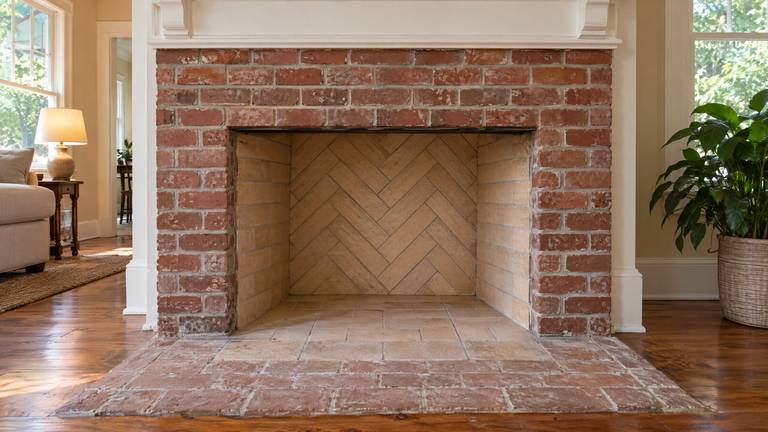
Where the floor meets the hearth
The join between the hearth and a wood or laminate floor is more than a finishing detail. The code for masonry fireplaces allows the edges of combustible flooring to butt against the hearth extension only when the edges are 12 inches or more from the inner face of the nearest firebox lining. The rule exists because the flooring edge is the combustible surface closest to the fire.
That distance is checked whenever a hearth or floor is being changed, and we plan the edge so the transition is neat and the flooring stays where it should. If a flooring contractor is involved, we agree the edge detail with them before either finish goes down.
Materials chosen for the heat they will see
Every layer of a hearth extension has to be noncombustible, from the base to the finish. The setting materials and grout near the opening also see more heat than the same products laid elsewhere in the house. Organic backer boards, wood underlayment and ordinary construction adhesives have no place under a hearth extension.
We choose the base, the setting bed and the grout for the position they will be in and use each exactly as its maker directs. If you have picked a finish, we check that the maker allows it in front of a fireplace before it is ordered. Decorative stone veneers, wood-look tiles and resin products vary widely in what their makers allow in front of a fireplace, so the product sheet is checked every time.
Curing before the next fire
Mortar, setting beds, fillers and grout all need time to cure before they meet heat. The time depends on the product and the conditions in the room, and each maker states it. Lighting a fire on fresh work drives moisture out too fast and can crack a repair that would otherwise have lasted.
You learn when the hearth can be walked on, when it can take furniture or tools and when the fireplace can be lit again. Those can be different days, so plan any gathering around the last of them. If a fire is planned for a particular evening, tell us when you book so the materials can be chosen with that date in mind.
A hearth used as a shelf
A fireplace that is rarely lit often becomes a display shelf, with planters, stone pieces or heavy decor on the hearth. The hearth is built to carry weight, but concentrated loads, dropped items and water from plant pots all leave marks. Metal planters and pot saucers can also leave rust marks that sink into porous stone.
If a crack appeared after something heavy was placed or dropped, tell us, since it points to impact and helps with the diagnosis. Water rings and mineral stains from plants can often be cleaned, and we check that no water has worked under loose tiles.


