
Chimney Services
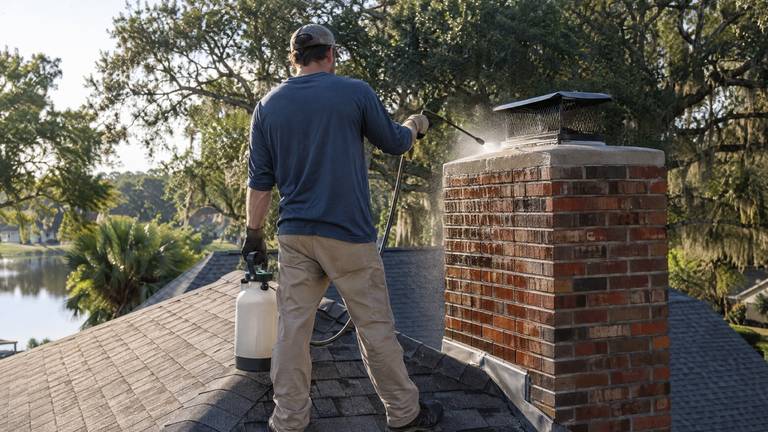
Inside a chimney waterproofing job in Fern Park
Why a chimney repellent has to breathe
Water vapor transmission is the most important property to weigh when choosing a coating for exterior brick, according to Technical Note 6A. Coatings with low vapor transmission slow evaporation and can trap water inside the brickwork, which leads to clouding of the coating and deterioration of the brick itself.
Whatever moisture gets into a chimney has to be able to leave again, through the same face it came in by. That is why we choose repellents made to stay vapor permeable and avoid sealers that close the surface, even when a glossy finish is what a homeowner first pictures. You get the product information for whatever goes on your Fern Park chimney.
Painted or glazed brick and repellents
Penetrating repellents need open pores to soak into. One siloxane repellent's maker rules out painted or glazed brick and tile, and Technical Note 6A warns that a penetrating coating typically will not work over an existing film-forming one.
If your chimney has been painted or coated, a standard repellent may be the wrong product. We explain what the existing finish allows, whether it would have to be removed first and what that involves, before recommending any treatment. Sometimes the sound answer is to repair the joints and the paint and leave the repellent out.
Wind-driven rain and a treated chimney
Sideways rain in a storm tests every face of a chimney. Technical Note 6A notes that a penetrating repellent's effectiveness under wind-driven rain is limited, and that it seldom stops water entering through wider cracks, which is one more reason cracks are repaired before treatment.
The Atlantic hurricane season runs from June 1 to November 30. An inspection booked early in the year gives time to repair and treat your Fern Park chimney before the season, on a day dry enough for a proper application.
Reading dark and damp patches on the brick
After rain, a chimney dries unevenly. Faces that stay dark for days, a band of dampness under the crown or dark streaks below a joint all point to where water is getting in and how slowly the brick releases it.
Our specialists read those patterns during the free inspection. Evenly absorbent brick is a candidate for a repellent, while concentrated wet areas usually lead back to a joint, crack, crown or flashing that needs repair first. We show you the patterns on your Fern Park chimney, so the recommendation makes sense to you as well as to us.


