
Services
Chimney rebuilding explained for Bertha
Questions every homeowner in Bertha should have answered before a chimney rebuild.
When the problem starts at the footing
A chimney that leans, pulls away from the house or cracks from the ground up may be telling you about its footing. Florida's residential code sets the footing under a chimney at 12 inches thick or more, in concrete or solid masonry, projecting at least 6 inches past the chimney on every side.
Rebuilding the top of a chimney that is still settling at the bottom only moves the problem upward. When the signs point below grade, we say so before quoting a rebuild and recommend that a structural engineer look at the footing first. That advice can change the whole plan, and it is better heard at the start.
Signs we look for include cracks that widen toward the ground, a chimney base that has dropped relative to the house foundation and gaps that are wider at the top than at the bottom.
Tying the roof flashing into the new brick
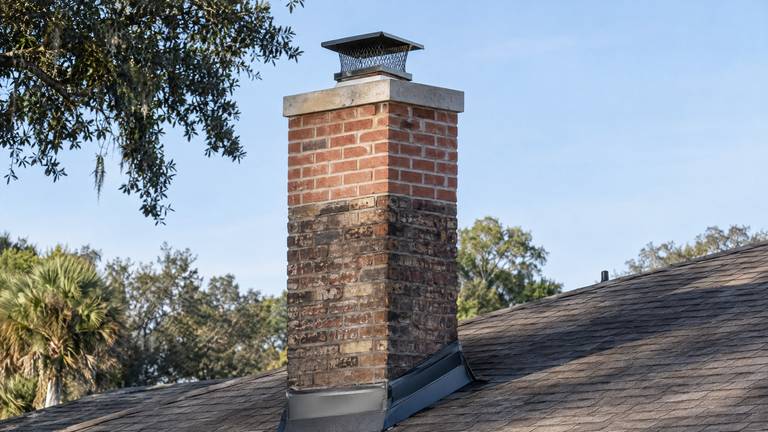
The flashing where a chimney meets the roof has two layers: base or step flashing woven into the roofing, and counterflashing let into the masonry and turned down over it. On a rebuild, the slot for the counterflashing is built into the fresh joints.
Rebuilding and reflashing therefore belong in one plan. New brick with old, reused flashing leaves the weakest joint in the wrong place, and fresh flashing cut into a chimney that is about to come down is wasted money. We schedule the two together and agree with your roofer, if you have one, on who finishes each layer.
Sealant alone along the top edge of flashing is a short-term fix. On a rebuilt chimney the counterflashing sits in a mortar joint or a cut slot, where it stays tight far longer.
Tooled joints that shed water
The finish on a mortar joint affects how well it resists rain. Brick industry guidance favors concave, V-shaped and grapevine tooled joints for weather resistance, since tooling compresses the mortar surface and presses it tight against the brick.
Raked and struck joints can look sharp but leave small recesses or ledges where water sits. On a rebuild we tool the joints in the weather-resistant style you choose, and we keep that finish consistent from the first new course to the crown so the rebuilt section reads as one piece.
Joint width matters as well. We keep the new joints close to the width of the old ones so the rebuilt courses line up with the masonry that stays and the transition is hard to spot.


